Union-Find in Graphs: Mastering Disjoint Sets with Union by Rank and Size
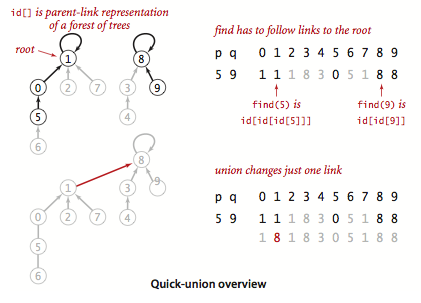
Disjoint Set Union (DSU), also known as Union-Find, is a powerful data structure for managing dynamic connectivity in graphs. It efficiently answers queries like "Are nodes A and B connected?" and performs unions to connect components. Let's dive into its workings, optimizations, and code implementation!
Why Union-Find?
Imagine a graph where edges are added dynamically. After each addition, you need to check if two nodes belong to the same component. A brute-force approach (BFS/DFS) would take O(N + E) per query. Union-Find reduces this to O(1) (amortized) using two core operations: find and union.
Core Functionalities
- •
find(u): Returns the "ultimate parent" of nodeu. - •
union(u, v): Connects the components containinguandv.
Key Optimizations:
- •Union by Rank/Size: Balances the tree during unions.
- •Path Compression: Flattens the structure during
findfor faster future queries.
Union by Rank with Path Compression
What is Rank?
Rank is an estimate of the tree's height. When merging two trees:
- •Attach the shorter tree under the taller tree.
- •If ranks are equal, increment the rank of the new root.
Path Compression
During find, all nodes along the path point directly to the root. This reduces future query times.
Algorithm:
def find(u):
    if parent[u] != u:
        parent[u] = find(parent[u])  # Path compression
    return parent[u]
Example:
After connecting edges {1-2, 2-3, 4-5, 5-6}, find(5) will update its parent to 4 (root).
Union by Size
Instead of rank, track the size (number of nodes) of each component. When merging:
- •Attach the smaller component to the larger component.
- •Update the size of the resulting component.
Why Size Over Rank?
After path compression, rank (height) becomes ambiguous, but size remains accurate.
Example:
Connecting size-3 and size-2 components results in a size-5 component.
Time Complexity
With both optimizations, each operation runs in time, where is the inverse Ackermann function (effectively a constant for all practical purposes).
Python Implementation
class DisjointSet:
    def __init__(self, n):
        self.parent = list(range(n + 1))  # 1-based indexing
        self.rank = [0] * (n + 1)
        self.size = [1] * (n + 1)

    def find(self, u):
        if self.parent[u] != u:
            self.parent[u] = self.find(self.parent[u])  # Path compression
        return self.parent[u]

    def union_by_rank(self, u, v):
        root_u = self.find(u)
        root_v = self.find(v)
        if root_u == root_v:
            return
        # Attach smaller rank under larger rank
        if self.rank[root_u] > self.rank[root_v]:
            self.parent[root_v] = root_u
        else:
            self.parent[root_u] = root_v
            if self.rank[root_u] == self.rank[root_v]:
                self.rank[root_v] += 1

    def union_by_size(self, u, v):
        root_u = self.find(u)
        root_v = self.find(v)
        if root_u == root_v:
            return
        # Attach smaller component to larger component
        if self.size[root_u] < self.size[root_v]:
            self.parent[root_u] = root_v
            self.size[root_v] += self.size[root_u]
        else:
            self.parent[root_v] = root_u
            self.size[root_u] += self.size[root_v]

# Example Usage
ds = DisjointSet(7)
edges = [(1,2), (2,3), (4,5), (6,7), (5,6)]
for u, v in edges:
    ds.union_by_size(u, v)

print("Are 3 and 7 connected?", ds.find(3) == ds.find(7))  # False
ds.union_by_size(3, 7)
print("Are 3 and 7 connected now?", ds.find(3) == ds.find(7))  # True
ELI5: Union-Find Explained Simply
Imagine you have groups of friends. Each group has a leader:
- •Find: To check if two people are friends, ask, "Who’s your leader?" If both have the same leader, they’re in the same group!
- •Union: When two groups merge, the smaller group’s leader joins the larger group’s leader. Everyone now follows the big leader!
Path Compression: Next time someone asks, "Who’s your leader?", they remember the top leader directly. No more asking through friends!
When to Use Union-Find?
- •Dynamic Graphs: Edges added incrementally.
- •Kruskal’s Algorithm for Minimum Spanning Trees.
- •Connected Components in undirected graphs.